Reading the Room: What the Betting Market Tells You Before the Books Even Open
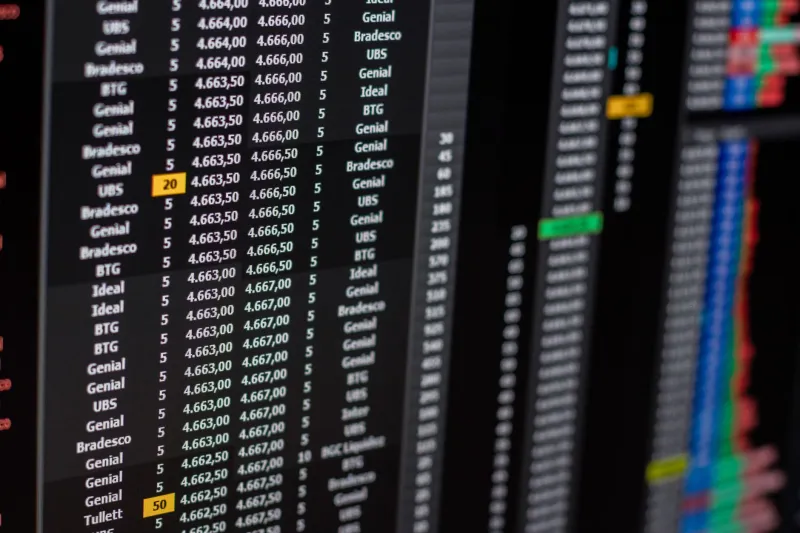
Here's something most recreational bettors never stop to consider: by the time you're reading injury updates on Twitter and checking consensus picks on your favorite forum, the professionals have already been in and out of the position. The line you're looking at right now? It's already been shaped by coordinated sharp action you never saw coming.
That doesn't mean you're locked out of the edge. It means you have to learn how to read what already happened.
Professional betting syndicates — the organized groups of sharp bettors who move markets for a living — can't help but leave behavioral fingerprints behind. They're not trying to tip you off, but the mechanics of how they operate create patterns that are visible if you know where to look. This isn't about getting insider information or tapping into real-time trading feeds. It's about understanding market microstructure well enough to reverse-engineer what the professionals already know.
Why Syndicates Can't Move Silently
The fundamental problem with betting a lot of money on a single game is that the market reacts to you. Sportsbooks aren't passive — they're constantly adjusting to protect their exposure. When a syndicate hits a line hard, books move quickly to limit their risk, which changes the number for everyone else.
This creates an unavoidable paper trail.
The key is understanding that syndicate action doesn't look like public action. When casual bettors pile onto a popular team, you tend to see gradual, steady line movement as the handle builds throughout the week. Sharp syndicate plays look different — they're faster, more surgical, and often happen at specific times that aren't random at all.
When a line moves two or three points within minutes of opening, especially in a direction that contradicts the obvious public lean, that's not a clerical error. That's the market absorbing a coordinated bet.
The Timing Sequence Is Everything
One of the most reliable syndicate fingerprints is when movement happens, not just how much it moves.
Professional groups tend to attack lines at predictable windows: shortly after the opener drops, during off-peak hours when books have lower alert thresholds, and occasionally right before a key piece of information becomes public knowledge — a starting lineup confirmation, a practice report, or a travel schedule update.
If you're tracking lines across multiple books and you notice one offshore market moving 30 minutes before a domestic book catches up, that lag isn't coincidental. Syndicates often hit the most favorable number first, then the market corrects as books communicate with each other or simply observe the movement elsewhere.
Get in the habit of checking line histories, not just current lines. Sites that publish opening numbers alongside current spreads are invaluable for this. A line that opened at -3 and is sitting at -5.5 by Tuesday afternoon on a Saturday game tells a completely different story than one that drifted the same amount gradually over five days.
Cross-Sport Correlation: The Pattern You're Probably Ignoring
Here's where it gets genuinely interesting. Sophisticated syndicates don't always operate in isolation within a single sport. Sometimes the same group of analytical models and bankrolls is active across multiple markets simultaneously, and that creates cross-sport correlations that most bettors never think to look for.
For example: if you notice unusual movement on an NBA total at the same time a seemingly unrelated NFL side is getting steamed, it might be worth asking whether both lines are being influenced by the same underlying analytical framework. Weather models, injury probability trees, and pace-of-play projections can all feed into multi-sport positions.
This is admittedly advanced territory, but the practical takeaway is simpler than it sounds. When you see unexpected movement in a market that doesn't align with any obvious public narrative, check whether adjacent markets are showing similar anomalies. Patterns that cluster across sports and bet types are rarely coincidental.
Reverse Line Movement: The Classic Tell
If you're newer to sports betting analytics, reverse line movement is the concept you need to internalize before anything else. It's one of the clearest syndicate signals in the market.
Here's how it works: the public is betting heavily on Team A. By conventional logic, the line should move to make Team A more expensive — books adjust to balance action. But instead, the line moves toward Team B. That's reverse line movement, and it almost always means sharp money came in on the other side and overwhelmed the public volume.
Books aren't moving the line to confuse you. They're moving it because the money they're worried about — the money that historically beats them — is on Team B. The public's dollars aren't nearly as threatening to a sportsbook's bottom line as a coordinated syndicate play.
When you see reverse line movement, you're essentially watching the book tell you: the professionals disagree with the crowd here.
Steam Moves and How to Spot Them
A steam move is a rapid, significant line shift that happens across multiple books almost simultaneously. When you see the same number jump at FanDuel, DraftKings, BetMGM, and Caesars within a 10-minute window, that's steam — and steam almost always traces back to coordinated sharp action.
The challenge is that by the time you notice a steam move, the best number is usually gone. But that doesn't make the information useless. Steam moves tell you the direction the sharp money is pointing, and if you can get down at a number close to where the move started, you're still riding the same edge.
Follow line movement aggregators and set alerts for significant shifts on games you're already researching. You won't catch every steam move in time to capitalize, but you'll start building a mental database of how these patterns behave — which markets move first, which books are slowest to adjust, and which bet types attract syndicate attention most frequently.
Putting It Together Without Syndicate Access
The honest truth is that you'll never have the same information syndicates have. They're running proprietary models, employing analysts full-time, and operating at a scale that makes their market intelligence fundamentally different from yours.
But you don't need to match them. You just need to recognize their footprints and follow in the same general direction.
Focus on these behavioral markers: early sharp movement against the public lean, reverse line movement on high-handle games, steam that clusters across multiple books simultaneously, and cross-market anomalies that don't have an obvious news-driven explanation.
None of these signals are foolproof in isolation. A line can move for plenty of reasons that have nothing to do with syndicate action. But when multiple signals point the same direction — when you're seeing reverse line movement and a steam move and early sharp action all on the same side — that convergence is worth paying attention to.
The market is always talking. Most bettors just aren't listening carefully enough.
Start paying attention to what the line is doing, not just what it says, and you'll start seeing the professional fingerprints that were there all along.