Before You Click Bet: The Hidden Math Inside Every Opening Number
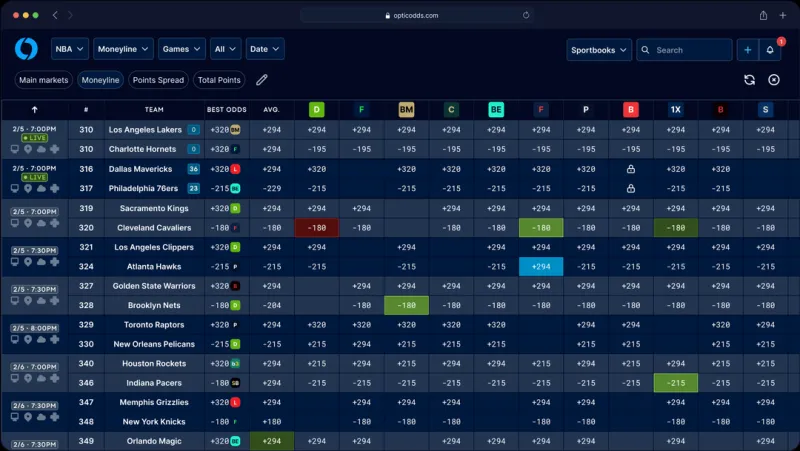
Photo: sportsbook odds board with betting lines on screens, via cdn.prod.website-files.com
Every morning, millions of bettors open their sportsbook apps and see a number staring back at them. Chiefs -3.5. Lakers -1.5. Yankees -130. Most people assume that number is the book's honest opinion of the game.
It isn't. Not even close.
An opening line is a business decision dressed up as a prediction. And if you don't understand what the book is actually doing when it posts that first number, you're not betting — you're donating.
The Line Is a Forecast and a Price Tag
Here's the part most recreational bettors never hear: oddsmakers build power ratings long before a single dollar comes in. These ratings crunch everything — recent performance, injury designations, rest advantages, travel schedules, even how a team performs on second nights of back-to-backs.
From that model comes a raw edge, say Chiefs by 4. But the book almost never posts the raw number. Why? Because the opening line has two jobs, and only one of them is being accurate.
The second job is attracting balanced action. The book wants roughly equal money on both sides so it can pocket the vig regardless of outcome. That means the number you see at open has already been nudged — shaded a half-point here, tweaked on the moneyline there — to account for how the public is expected to bet, not just how the teams match up.
When the Cowboys play on Sunday Night Football, the line isn't purely Dallas and their opponent. It's Dallas, their opponent, and the weight of a national fanbase that bets with its heart.
Liability Management: The Part Nobody Talks About
Books aren't just setting a line for one game. They're managing exposure across an entire slate, an entire week, sometimes an entire season.
If a book's sharpest customers have been hammering a certain type of number — say, second-half unders in divisional games — the opening line on the next similar matchup might quietly build in a cushion against that tendency. You're not just betting the game; you're betting against the book's memory of every game before it.
This is also why two books can open the same game a full point apart. One shop might be heavy on liability from earlier in the week. Another might be aggressively hunting for volume. The discrepancy isn't noise — it's information.
Where the Exploitable Value Actually Lives
So how do you know which opening numbers are soft and which are traps? A few patterns worth tracking:
Low-profile matchups get less attention. A random Tuesday MLB game between two sub-.500 teams gets a fraction of the modeling effort that a marquee matchup does. Lines on games nobody's watching tend to be less precise — and less precise means more exploitable.
Derivative markets lag the main line. By the time first-half and team-total markets open, the main number has often been live for hours. If the main line has already moved, the derivatives may still be priced off the stale opener. That gap is where sharp bettors eat.
Numbers that open and stay put deserve suspicion. A line that doesn't move after hours of two-way betting is a line the book is confident in. A line that moves within minutes? Somebody with a track record just fired on one side, and the book adjusted. Follow the correction, not the opener.
Stop Betting the Number, Start Betting the Movement
Here's the mindset shift that separates the 5% from the 95%: the opening line is the start of a negotiation, not the final word.
Your job isn't to guess whether Chiefs -3.5 is "right." Your job is to figure out whether the market's eventual consensus — the closing line — will land higher or lower than where you're getting in. If you can consistently enter before the market corrects toward the truth, you'll win money even in stretches where your tickets lose. That's called closing line value, and it's the single most reliable indicator of long-term betting skill.
Compare the number you bet to the number at kickoff. Do that for a month. If the closing line is consistently worse than your entry, you're beating the market — even if your record doesn't show it yet. If the closing line is consistently better, no amount of handicapping genius is saving you.
The Takeaway
The 10 a.m. number was never built for you. It was built by a room full of models and risk managers trying to predict you — your biases, your team loyalty, your tendency to chase last week's highlights.
Once you see the opening line as a pricing strategy rather than an opinion, the whole board looks different. Some numbers are iron. Some are soft. And the bettor who knows the difference isn't guessing anymore — they're shopping.